
Local Life
From One-Room Schoolhouse to Full Campus: How Cibolo Grew SCUC ISD
For a lot of us, the schools are why we chose Cibolo. Here's how SCUC ISD grew alongside the neighborhoods, from Cibolo Valley Elementary to Friday nights at Steele.
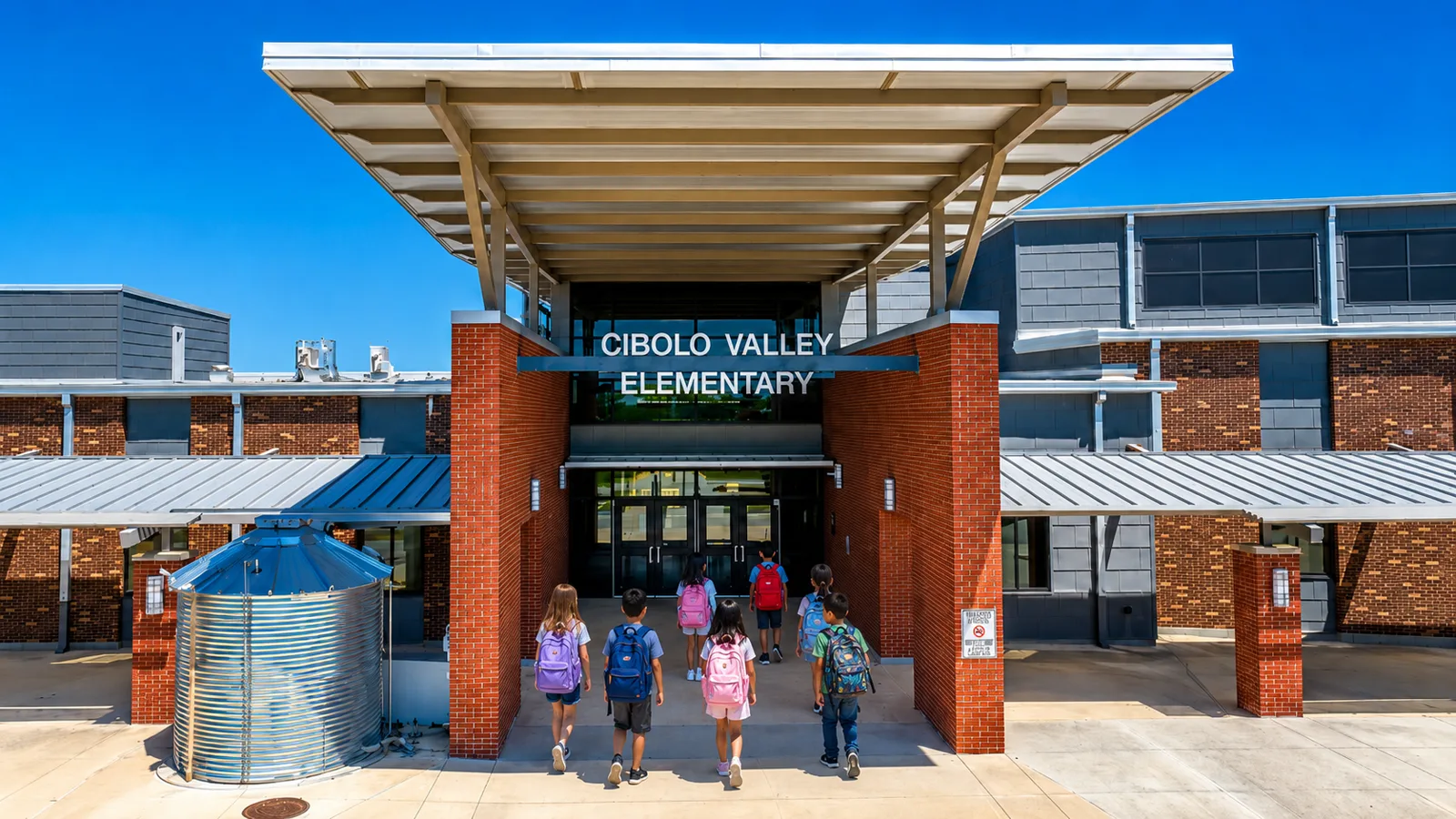
We drive through Cibolo and see the city still being built, fields of new roofs and wide streets that feel like they were laid out for the next wave of neighbors. For a lot of us, what made us choose Cibolo was simple: the schools. SCUC ISD is not background scenery here, it is the spine of daily life, and watching those schools change has been watching our town grow up.
A district stretched by new neighborhoods
Growth arrived fast enough that the district had to respond in real time. At peak times we were adding roughly 600 to 700 new students a year, and the pressure showed. Old cafeterias and classrooms that had been fine when neighborhoods were smaller suddenly felt crowded. Watts Elementary on Deer Meadow Boulevard developed the sort of bustle you only get when a school is the daily gathering point for a whole neighborhood. Playgrounds and music rooms that had served generations began to show their age. The Community Advisory Committee took a bus tour of facilities and the picture was clear: the district had been running hard for decades and some buildings were being asked to do more than they were built for.
The campuses we know and the moments we remember
Walk our streets and you can name the places where Cibolo life happens. Cibolo Valley Elementary was built as a prototype campus, the one the district used as a model when thinking about future schools. It became one of the first schools chosen for the district pilot out-of-district transfer program, and families in the newer subdivisions often find themselves zoned there. Watts Elementary at 100 Deer Meadow Boulevard is where Veterans Day becomes a community parade and where forums about bonds have been held in school cafeterias.
Wiederstein Elementary at 171 Borgfeld Road is the kind of place where a first-grader named Carrigan got a Make-A-Wish surprise and the whole neighborhood felt like family the next day. Wilder Intermediate, which predates many of the subdivisions around it, began to show wear in hallways and cafeterias as enrollment climbed. Dobie Junior High's choir and orchestra rooms were always in use even when the spaces were too small. At the high school level, Byron P. Steele High School at 1300 FM 1103 exists because growth demanded another campus. Steele developed its own identity, with the band earning grants and performing regionally, an Interact Club recognized for service, and athletes moving on to college programs.
Those Friday nights at Steele's field, with the band on the sidelines and families packed into the stands, are the visible outcome of a district that stopped being a one-room schoolhouse long ago and became a community center for an entire generation.
How we built more than buildings
Cibolo's growth shows up in bond elections and community meetings as much as in construction cranes. Voters have repeatedly been asked to decide how fast and where to build, from a bond that added Cibolo Valley Elementary to a later package of projects totaling $137 million. The pattern was always the same: the district presented needs, neighborhoods gathered in gymnasiums and cafeterias, advisory committees walked buildings, and residents voted on a long-range answer. Those moments were civic life here, with parents sitting in student-sized chairs and talking through not just blueprints, but the kind of schools they wanted their children to attend.
The older facilities carry stories as well as cracks. The weight room at Clemens that has trained generations of athletes, choir rooms that kept music alive in smaller spaces, and counselors quietly steadying students all became part of how Cibolo measured itself.
What comes next for Cibolo and SCUC ISD
The urgent building pace has eased in places, and now the district is balancing renovation and maintenance with continuing growth in other corners of town. A meaningful portion of our families are military-connected because JBSA-Randolph is nearby, roughly 17 percent at one point, and the district learned to manage midyear moves and transitions so new faces fit in fast. That continuity matters when families rotate through on orders, when kids arrive mid-semester and need the same clubs, JROTC traditions, and routines they left behind.
We live around these campuses, cheer at the band performances, send kids to science expos and Model UN events, and remember when a teacher like Marcia Caballero had the whole school celebrating her regional honor. The buildings are only part of the story; the rest is how we keep using them as the heart of Cibolo.
Come walk the loop around Cibolo Valley Elementary, stop by a Friday night at Steele's field, or drop into Watts to see a school that still holds neighborhood life together.
Have a question this didn't answer?
Ask us directly.
We're The Claus Team, and we actually live and work here. Happy to help, no pressure.